

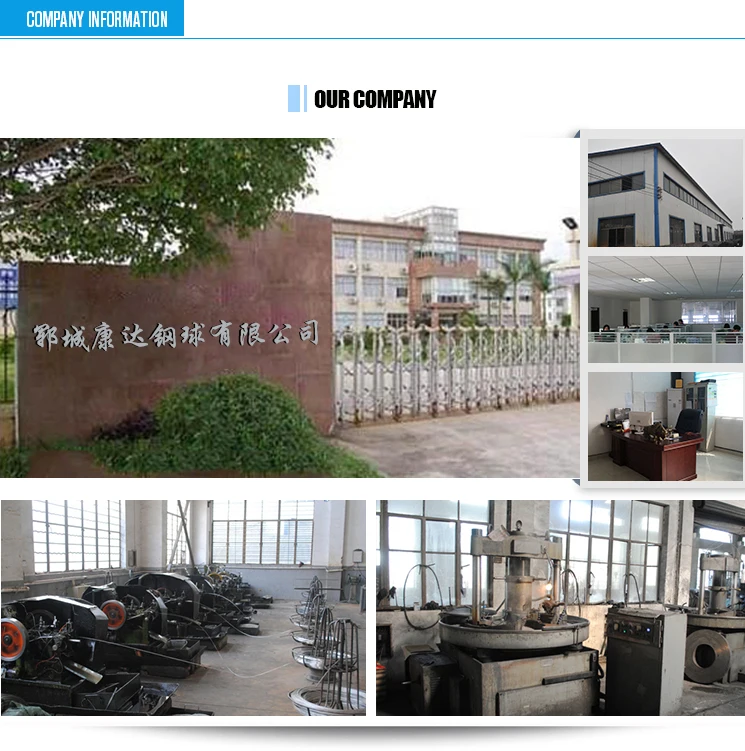
1. Established in 1998. Has 20 years of experience in production and marketing.
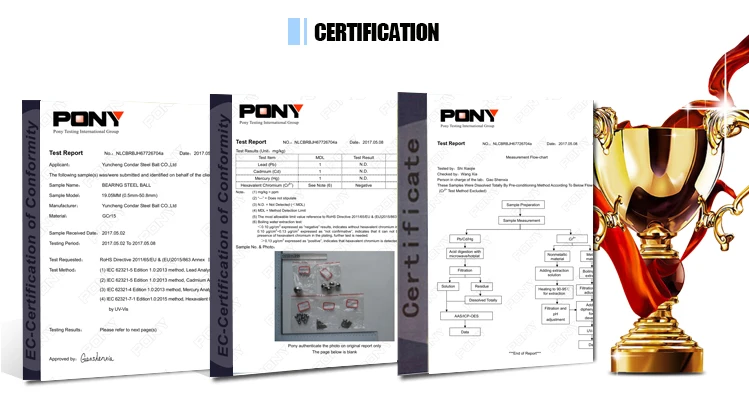
2. Possesses SGS/ROHS certification and an excellent management team.
3. Advanced production and testing equipment.
4. Fixed assets of over 10 million yuan.
5. Technical personnel with more than 10 years of production experience.
6. Our warehouse is located in a national AAAAA-level logistics park, which offers large inventory and fast delivery.
Based on 7.40% of domestic market sales.
8. High reputation, with a large number of customers from all over the world.
We sincerely look forward to establishing partnerships with any client at any time.


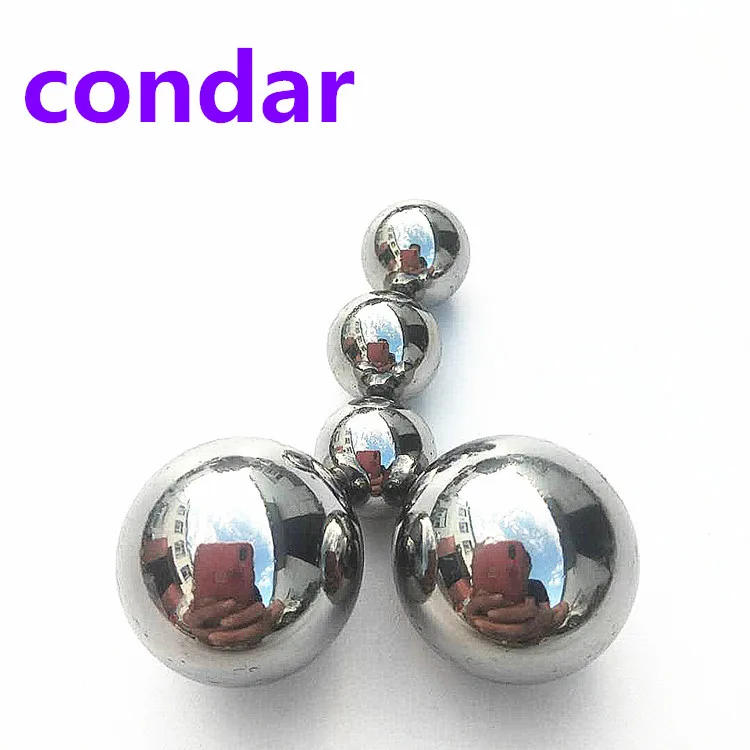
440C material, 7mm-22mm stainless steel spherical high-resolution mirror can illuminate people.
Gcr15, AISI52100 chrome steel ball :
Application areas:
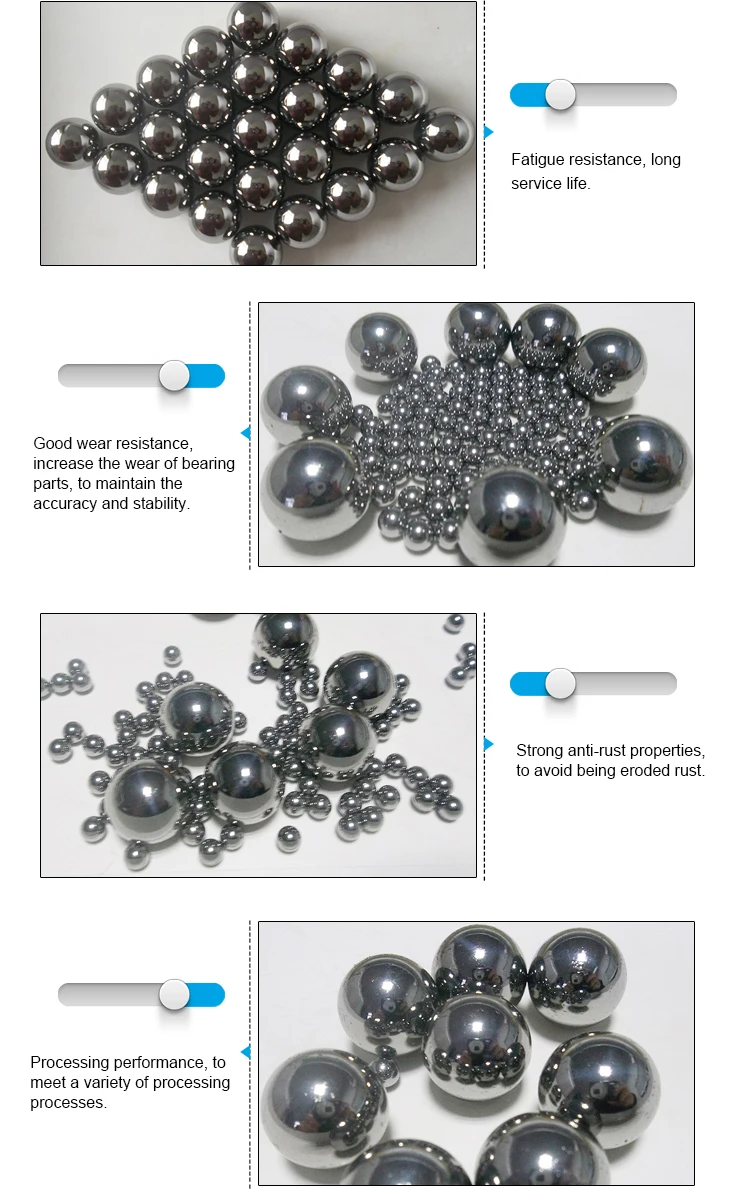
It is commonly used in bicycles, bearings, motorcycles, automobiles, slide rails, ISBs, luggage, electronics industry, etc.
Function:
high speed
low price
High hardness, HRC: 60-66
Chemical and physical composition of Gcr15, AISI52100 chromium steel balls
| C | 0.95-1.10% |
| Si | 0.15-0.35% |
| Mn | Maximum 0.50% |
| P | Maximum 0.025% |
| S | Maximum 0.025% |
| Cr | 1.30-1.60% |
Photo shows

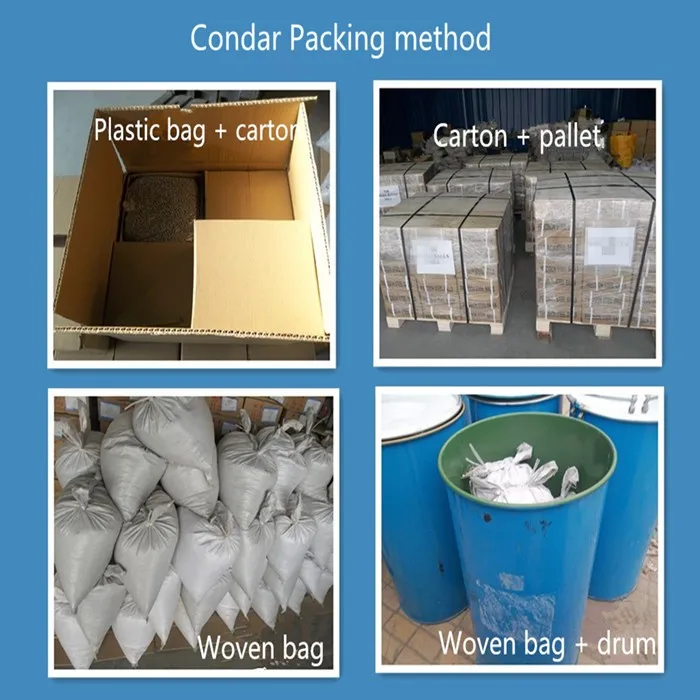
Packaging details: Carton packaging, woven bags, cartons + pallets, rollers, or packaging according to customer requirements.
Delivery details: 3-5 days after order, depending on order quantity.

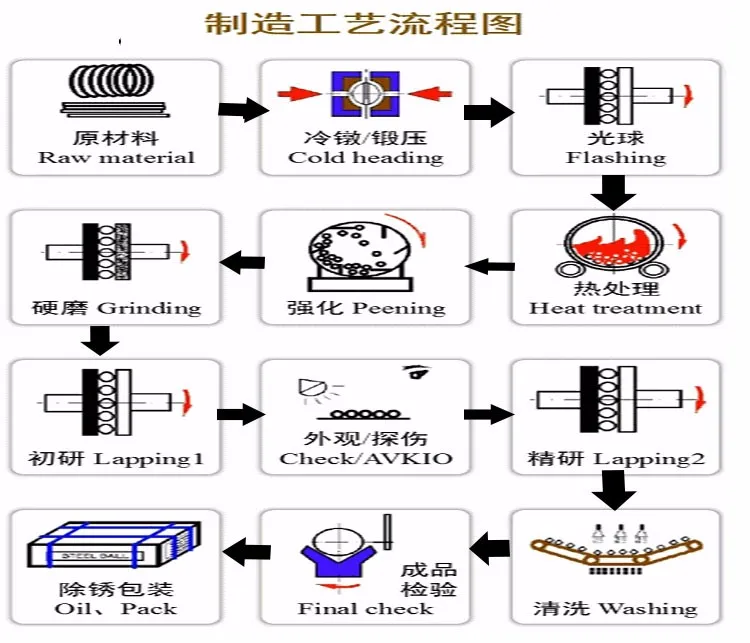
Production process
Steel ball testing
The hardness of steel balls is generally tested using a Rockwell hardness tester, and is usually expressed as HRC+ value.
1. The hardness of bearing steel balls is generally HRC60-66;
2. The hardness of stainless steel balls is generally around HRC26;
3. The hardness of carbon steel balls is generally HRC55-65;
4. The hardness of the soft carbon steel ball is approximately HRC30;
G5 and G10 high-precision steel balls are mainly used to measure ellipticity, that is, the spherical error of the ball, which is mainly detected by a roundness meter. Through its measurement, a computer can draw a very precise trajectory, thereby determining whether the ellipticity is correct.
The most important thing for steel balls is to measure the tolerance using a micrometer or a spiral micrometer. Large steel balls are measured using vernier calipers.


Buying factory-direct keeps price and specification in one place. This model is a solid, single-piece ball rather than a shell or a plated core, so its mass and shape stay steady through repeated use. We supply 440C stainless steel balls in the middle of our size range — compact enough for bearing and linkage work, substantial enough to carry load in a joint, a counterweight or a test rig. Most orders come from two situations: a worn ball that must be replaced with the same fit, or a production line that runs one diameter and one class for months at a time.
| Property | Value |
|---|---|
| Material | 440C stainless steel |
| Diameter range | 7.938 mm - 22.225 mm |
| Hardness | HRC 58-62 |
| Precision grade | G10 - G1000 |
| Dimension standard | DIN / AISI / GB/T308.1-2013 |
| Brand | Condar |
| Model | cd1403 |
| Country of origin | Shandong, China |
| Manganese (Mn) | 0.50% max |
| Phosphorus (P) | 0.025% max |
| Sulfur (S) | 0.025% max |
Condar Kangda is a factory-direct steel ball supplier serving bearing, testing and industrial component buyers. Our range covers hardened chrome, 440C stainless and 304/316 stainless steel balls in diameters from 1.5 mm to 120 mm, in precision grades such as G10, G100 and G200, plus miniature ball bearings. We supply in bulk and support hardness and roundness testing on request. For non-standard diameters, grades or materials, send your drawing and we will quote OEM and custom production. Share your annual volume and we will confirm delivery.
G10 is the tightest class in this range and G1000 the loosest; the grade is a tolerance class rather than a material, setting how far diameter and roundness may vary. Precision balls in the tight grades are the ones for rolling contact and anything that spins, while the looser classes are serviceable in counterweights, weights and general hardware. Send the grade from your drawing and we will match it.
Where wear is the main risk, 440C stainless steel balls are the stronger choice; where moisture, wash-down or chemical exposure dominates, 316 holds up better and 304 sits in between. Chrome steel such as GCr15 or AISI 52100 hardens to roughly HRC 60-66 and is the classic material for high-volume bearings, but it needs an oil or grease film to stay free of rust. Tell us the running conditions and we will say which grade we would supply.
Yes — as steel ball manufacturers we work across a much wider spread than this band, and another diameter is often available in the same 440C material. Send the diameter, the grade and the quantity you need, and mention what the ball has to do, so we can suggest a workable size if your first choice is not something we hold in stock.
Stainless steel bearing balls keep well in the packaging they arrive in, somewhere dry at room temperature, away from acids, salt air and wet floors. If you decant them, use a clean dry container and keep different grades and diameters in separate bins, because a harder or coarser ball can mark a finer one. Give the balls a wipe with a soft dry cloth before fitting if they have been sitting on a shelf.
Yes — nickel, zinc or copper plating and drilling can be arranged on request, and those jobs are made to your drawing rather than from the standard size list. Most stainless steel balls are bought bare and ready to fit, so a coating or a hole is treated as a custom item. Tell us the end use as well, because it affects which treatment we would recommend.
This product is an industrial steel ball component, and the standard supply is not built around aerospace or medical certification. These are balls rather than finished bearings, so a complete bearing assembly is outside this product. If your assembly is regulated, tell us the documentation and traceability you need before ordering, and we will confirm what we can support.


