

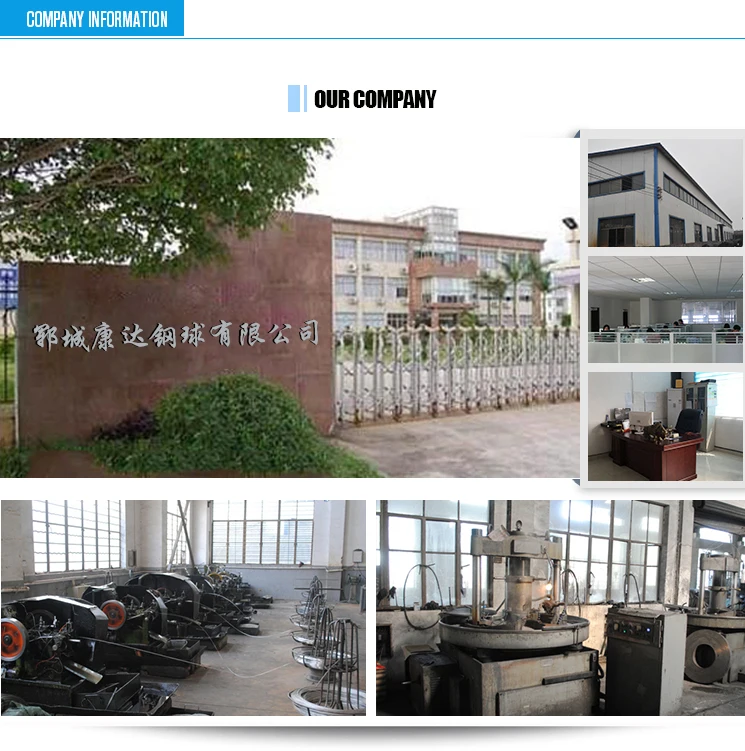
1. Established in 1998. Has 20 years of experience in production and marketing.
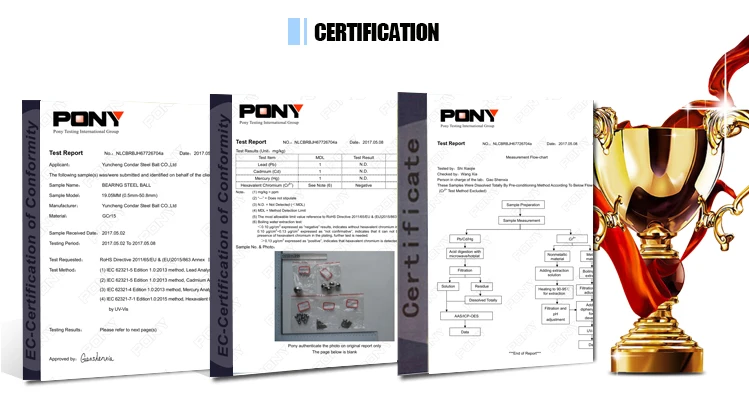
2. Possesses SGS/ROHS certification and an excellent management team.
3. Advanced production and testing equipment.
4. Fixed assets of over 10 million yuan.
5. Technical personnel with more than 10 years of production experience.
6. Our warehouse is located in a national AAAAA-level logistics park, which offers large inventory and fast delivery.
Based on 7.40% of domestic market sales.
8. High reputation, with a large number of customers from all over the world.
We sincerely look forward to establishing partnerships with any client at any time.


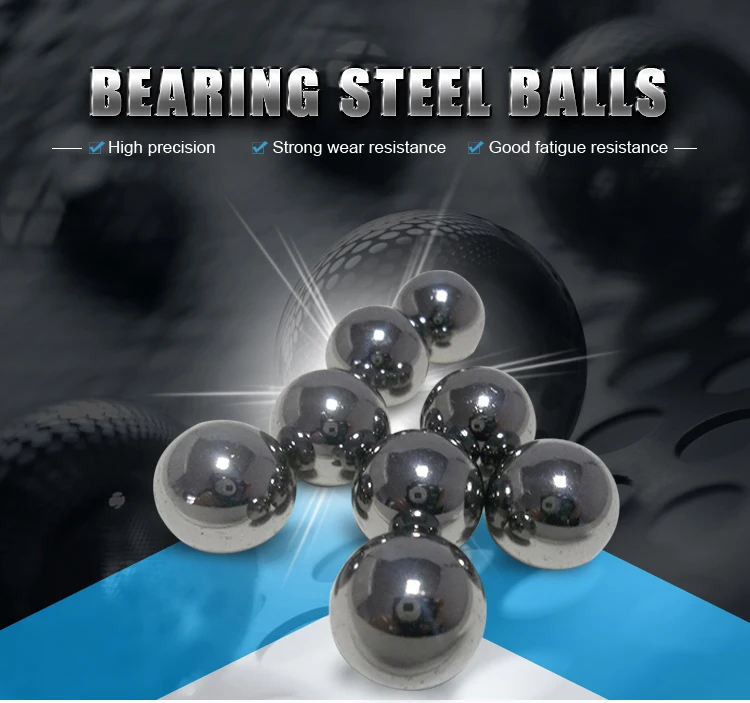
3.5mm, 3.8mm, 5.95mm, 6.35mm, 6.5mm miniature ball bearings with chrome/low carbon/stainless steel balls.
Gcr15, AISI52100 chrome steel ball :
Application areas:
It is commonly used in bicycles, bearings, motorcycles, automobiles, slide rails, ISBs, luggage, electronics industry, etc.
Function:
high speed
low price
High hardness, HRC: 60-66
Chemical and physical composition of Gcr15, AISI52100 chromium steel balls
| C | 0.95-1.10% |
| Si | 0.15-0.35% |
| Mn | Maximum 0.50% |
| P | Maximum 0.025% |
| S | Maximum 0.025% |
| Cr | 1.30-1.60% |
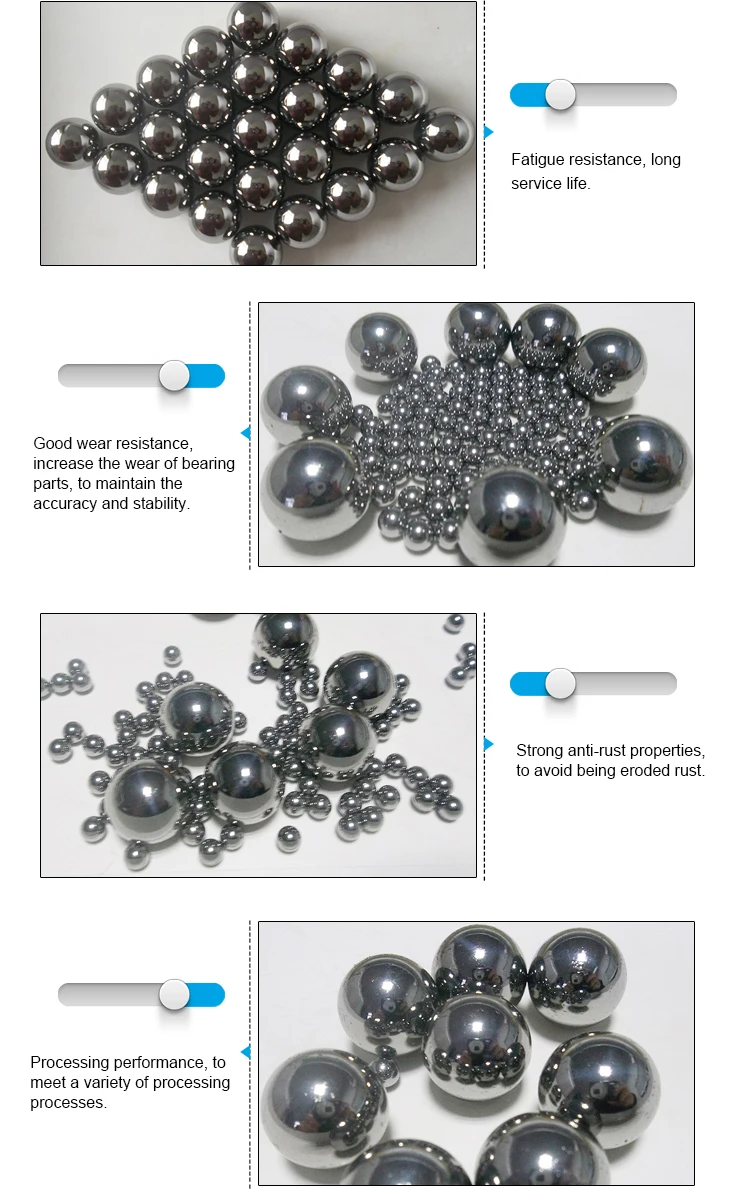
Photo shows


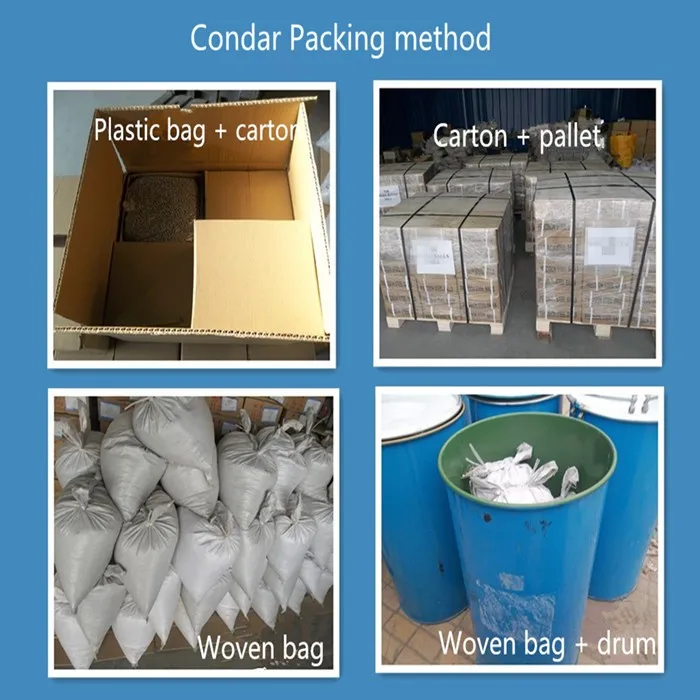
Packaging details: Carton packaging, woven bags, cartons + pallets, rollers, or packaging according to customer requirements.
Delivery details: 3-5 days after order, depending on order quantity.

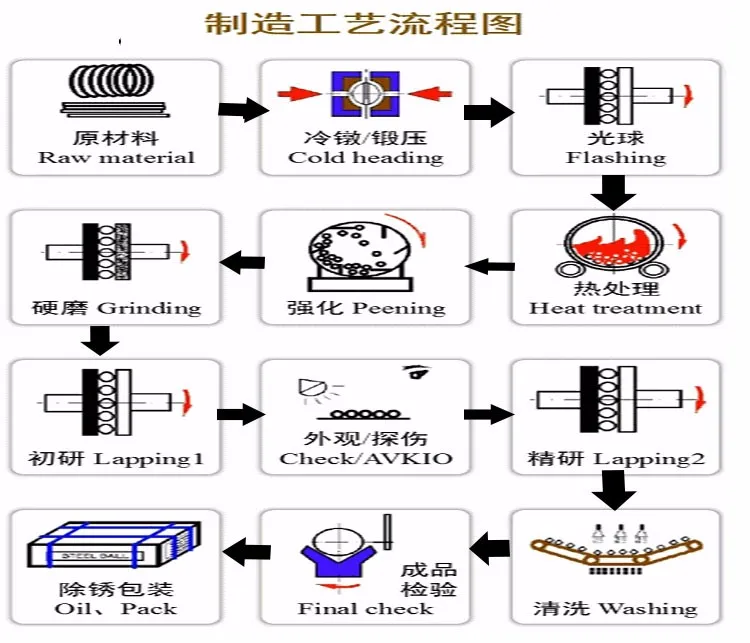
Production process
Steel ball testing
The hardness of steel balls is generally tested using a Rockwell hardness tester, and is usually expressed as HRC+ value.
1. The hardness of bearing steel balls is generally HRC60-66;
2. The hardness of stainless steel balls is generally around HRC26;
3. The hardness of carbon steel balls is generally HRC55-65;
4. The hardness of a soft carbon steel ball is approximately HRC30;
G5 and G10 high-precision steel balls are mainly used to measure ellipticity, that is, the spherical error of the ball, which is mainly detected by a roundness meter. Through its measurement, a computer can draw a very precise trajectory, thereby determining whether the ellipticity is correct.
The most important aspect of measuring steel balls is the tolerance, which is checked using a micrometer or a spiral micrometer. Large steel balls are measured using vernier calipers.


Chrome — for rolling contact
The chrome steel balls in this range are made from GCr15 / AISI 52100 bearing steel, ground and through-hardened to HRC 60–66. They are the fast-running option and the default choice wherever the ball carries rolling contact inside a miniature bearing.
Low-carbon — for pressing and static duties
Carbon steel balls run at HRC 55–65, and soft carbon at around HRC 30. These softer versions press more easily, are kinder to mating parts and cost less where the ball works as a spacer, filler or counterweight rather than a rolling element.
Stainless and plated — for corrosion and appearance
Stainless steel balls sit at the softer, corrosion-resistant end of the family at around HRC 26. A chromium-plated finish over a carbon steel core is available where a bright, hard-wearing surface is wanted. If an assembly mixes materials, tell us which part takes the wear and we will suggest the pairing.
| Property | Value |
|---|---|
| Model | cd1411 |
| Product type | Miniature bearing balls |
| Diameter range | 3.5 mm to 6.5 mm (five sizes) |
| Materials | Chrome bearing steel, low-carbon steel, stainless steel, chromium-plated |
| Precision grade | G10–G1000 |
| Surface | Ground |
| Standards | DIN, AISI, GB |
| Certification | ISO, RoHS |
Condar Kangda is a factory-direct steel ball supplier serving bearing, testing and industrial component buyers. Our range covers hardened chrome, 440C stainless and 304/316 stainless steel balls in diameters from 1.5 mm to 120 mm, in precision grades such as G10, G100 and G200, plus miniature ball bearings. We supply in bulk and support hardness and roundness testing on request. For non-standard diameters, grades or materials, send your drawing and we will quote OEM and custom production. Share your annual volume and we will confirm delivery.
Solid all the way through — every one of these bearing balls is a single piece of steel, not a hollow shell or an inserted core. That gives full weight and full load capacity in rolling contact, whichever diameter, material or grade you order.
The grade describes how close a precision steel ball is to a perfect sphere and how tightly its diameter is held, so it is the number that decides running quality. G10 is the tightest end of the range and suits fast-running, quiet miniature bearings, while G1000 works well on static duties such as spacers and fillers. Tell us the speed, load and noise limits of the assembly and we will confirm the grade to specify.
Stainless steel balls are the version to specify for humid rooms, wash-down equipment and instruments that are cleaned often, because corrosion resistance matters more there than maximum hardness. Chrome and low-carbon balls prefer dry, lightly oiled conditions. Tell us where the ball will work and we will point you to the version that lasts longest.
Yes — miniature bearings and similar small assemblies are the main work for this five-size range, and the diameters sit close enough together that a single specification normally covers a whole product family. That keeps stock lists short for a ball bearing manufacturer buying in volume. Send us the shaft speed and expected load and we will recommend the grade to set.
Chrome steel balls are the fast-running choice here, through-hardened for rolling contact at speed, which is why they are the usual specification for miniature bearings. Low-carbon and stainless versions suit slower, lighter or more corrosive duties where hardness matters less. Match the material to the working environment and the ball will hold its shape for the life of the assembly.
Yes — 6.35 mm converts to exactly 1/4 inch, so imperial-built housings and 1/4 inch ball seats take it without adjustment. It is available in chrome, low-carbon and stainless versions, so replacing an imperial ball does not force a change of material. Keep the grade used in the original assembly unless the duty has changed.


