
Our steel ball manufacturers produce precision 10mm to 15.8mm stainless steel balls, including threaded steel balls, tailored for drilling threads with superior hardness and corrosion resistance—ideal for industrial use.


Optimized Functionality for Industry Professionals
This product targets industrial engineers and technicians requiring precise, durable components for drilling threads. Our steel ball manufacturers offer these threaded steel balls and small steel balls made from 304 or 316 stainless steel, ensuring corrosion resistance and mechanical robustness. Designed to provide consistent dimensional integrity, these balls assist users in maintaining operational precision and repeatability in drilling applications, supporting high-quality manufacturing workflows where stringent tolerances are critical.
Advanced Material Properties and Rigorous Quality Controls
Constructed from high-grade 304 or 316 stainless steel, these steel balls undergo detailed polishing and hardness testing to achieve a hardness rating of HRC26-30. Available in sizes from 10mm to 15.8mm, each unit meets international standards including DIN, AISI, and GB certifications. The product range includes precision grades from G10 to G1000, enabling compatibility across a wide array of applications. Packaging customization and flexible logistics further enhance supply chain integration, providing reliable delivery and storage tailored to client requirements.
Industrial Application and Operational Versatility
These threaded steel balls and small steel balls serve as critical components in machinery dedicated to thread drilling, quality control fixtures, and tooling assemblies. Their corrosion resistance and hardness contribute to extended service life and operational efficiency. Applicable across sectors such as automotive manufacturing, electronics production, and mechanical tool fabrication, their precision dimensions support system integration into equipment requiring high-accuracy threaded ball elements, demonstrating significant return on investment through enhanced product durability and reduced maintenance intervals.
Product Advantages
Design Precision and Structural Adaptability
The design of these steel balls reflects careful selection of materials and controlled manufacturing processes, including polishing and precise hardness calibration, enabling consistent roundness and surface finish. Available in a range of precision grades (G10 to G1000), these threaded steel balls integrate seamlessly into existing industrial systems requiring robust mechanical components. The modular size range from 10mm to 15.8mm accommodates diverse application needs, affording engineers flexibility when designing or repairing thread drilling machinery.
Enhanced Performance and Operational Reliability
From a performance perspective, these steel balls exhibit exceptional wear resistance due to their stainless steel composition and hardness properties. Their compliance with international standards ensures reliable operation under demanding conditions, reducing downtime and maintenance costs. Usability is improved by customizable packaging and flexible shipping options, facilitating just-in-time inventory management. Ultimately, these products deliver measurable value by optimizing thread drilling precision and equipment longevity within industrial settings.
Use Scenarios
Application in Precision Thread Drilling Machinery
In manufacturing environments focused on thread drilling, these threaded steel balls are integral to maintaining dimensional accuracy and mechanical stability of drilling fixtures. The stainless steel composition resists corrosion from coolant fluids and operational wear, while adherence to strict quality standards guarantees consistent performance. Integration of these balls into drilling systems supports frequent high-precision machining tasks, ensuring compliance with production tolerances and extending equipment lifecycle in automotive and aerospace component manufacturing.
Role in Quality Control and Tool Assembly
Within quality control labs and tooling workshops, these small steel balls act as calibrating and reference components for threaded joint assemblies. Their polished surface and graded hardness provide reliable benchmarks for evaluating thread integrity and mechanical fit. The customizable nature and range of sizes support various inspection and assembly protocols, allowing for precise adjustments in tooling setups. By facilitating accurate measurement and adjustment, these steel balls uphold production quality standards across electronics and mechanical industries.
1. Established in 1998, with more than 20 years Production experience
2. It has dozens of advanced equipment and Four large production lines.
3. Fixed assets exceeding 10 million RMB .
4. Exceed 700 square meters The workshop and more than 200 employees.
5. Find a branch office in the country AAAAA-level logistics park Deliver the goods in Liaocheng on time.
6. 40% domestic market Based on sales volume.
7. It is exported to many countries around the world and has won a high reputation for its low prices and high quality.


High-quality steel balls (5.0-20.0 mm stainless steel balls) can be used for thread drilling.
Drilling steel ball (3.0 mm - 50 mm) :
1. Capable of machining various drilled steel balls according to drawings.
2. The main drilling holes are made of carbon steel and stainless steel.


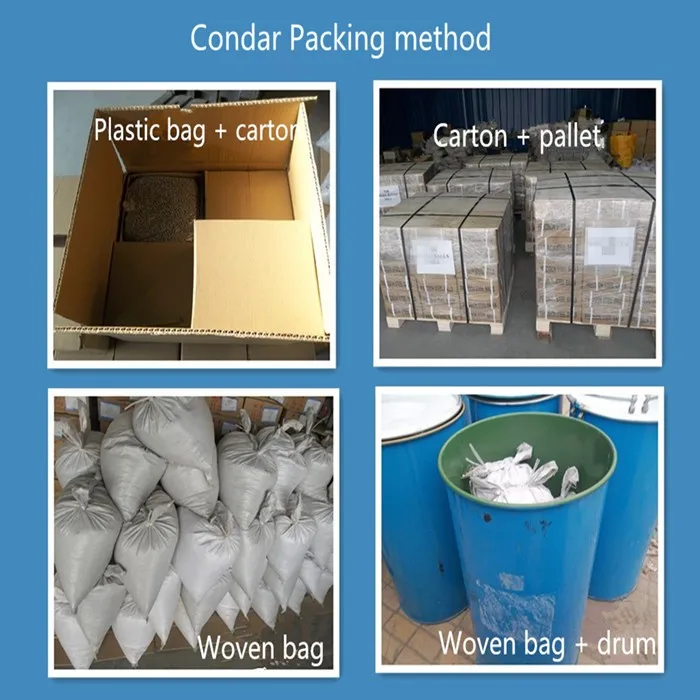
Packaging details: Carton packaging, woven bags, cartons + pallets, rollers, or packaging according to customer requirements.
Delivery details: 3-5 days after order, depending on order quantity.


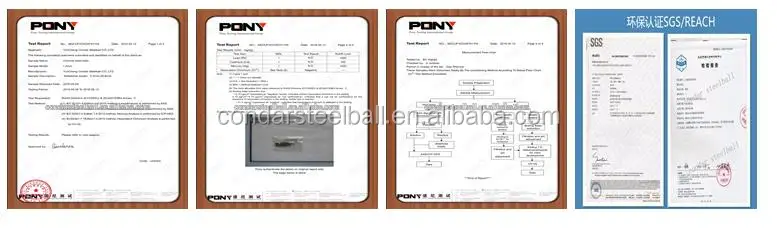
Our certification
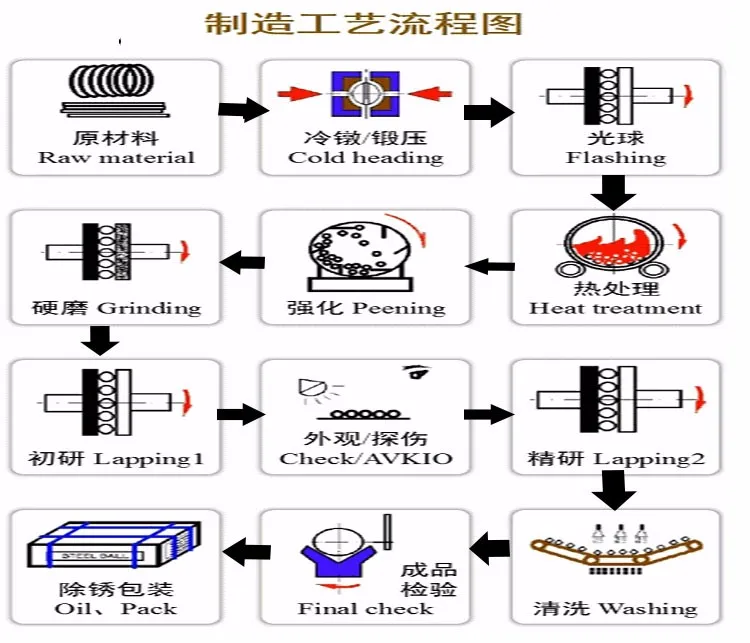
Production process
Steel ball testing
The hardness of steel balls is generally tested using a Rockwell hardness tester, and is usually expressed as HRC+ value.
1. The hardness of bearing steel balls is generally HRC60-66;
2. The hardness of stainless steel balls is generally around HRC26;
3. The hardness of carbon steel balls is generally HRC55-65;
4. The hardness of the soft carbon steel ball is approximately HRC30;
G5 and G10 high-precision steel balls are mainly used to measure ellipticity, that is, the spherical error of the ball, which is mainly detected by a roundness meter. Through its measurement, a computer can draw a very precise trajectory, thereby determining whether the ellipticity is correct.
The most important thing for steel balls is to measure the tolerance using a micrometer or a spiral micrometer. Large steel balls are measured using vernier calipers.

Customer visits and signs contract


