


Wine cleaning balls, 3.0mm 304 stainless steel balls, used as bottle cleaner.
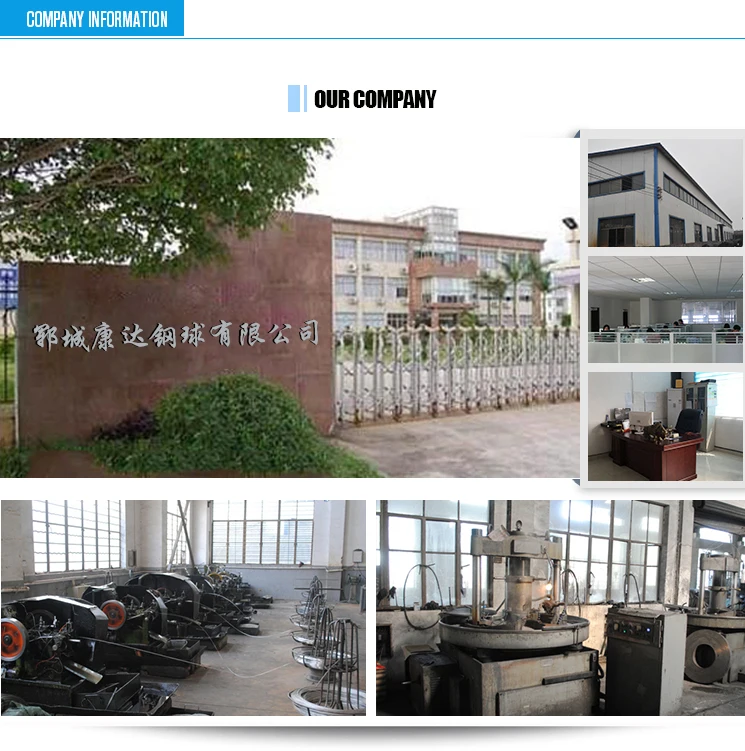
Yuncheng Kangdaer Steel Ball Co., Ltd. was established in 1998 and has a long history in Shandong Town. (Yuncheng Water Margin!)
Kangdaer Steel Ball Factory has introduced many advanced steel production and testing equipment, which has greatly improved production efficiency and product quality, providing more high-quality steel to new and old customers. The main specifications are 0.3mm-200.0mm, and the main models are stainless steel ball bearings, steel balls, chrome steel balls, drilled steel balls, electroplated balls, micro balls, and large balls.


Red wine cleaning balls, 3.0 mm 304 stainless steel balls, used as bottle cleaner:
Application areas:
It is commonly used in medical devices, chemicals, aerospace, mobile phone panels, accessories, valves, atomizers, perfume bottles, etc.
Function:
High precision
Good preservative
softer
Highest hardness, HRC<26。
Chemical and physical composition of 316, SUS316 stainless steel balls
|
Maximum 0.08% |
|
|
Mn |
Maximum 2.0% |
|
P |
Maximum 0.045% |
|
S |
Maximum 0.030. |
|
Si |
Maximum 1.0% |
|
Cr |
16.0-18.0% |
|
Ni |
10.0-14.0% |
|
N |
Maximum 0.10% |
|
Mo |
2.0-3.0% |
|
Strength extension |
90,000 psi |
|
Yield strength |
45000 psi |
|
Scalability |
35% |
|
elastic modulus |
28,000,000 psi |
|
density |
0.290 psi |
Photo shows


Baby Bottle Cleaning in Retail or Supply Environments
In retail, wholesale, or maternity product supply environments, buyers often need cleaning accessories that can help remove milk film or residue from baby bottles with narrow interiors. In this setting, the cleaning balls act as a reusable internal scrubbing medium when combined with water and shaking, helping staff or end users reach areas that are difficult to access with standard tools. The 3.0mm 304 stainless steel structure is well-suited to this scenario because it supports repeated use, practical cleaning performance, and simple post-cleaning maintenance.
Container Cleaning Support for Food and Beverage Handling
In food and beverage preparation areas, small glass or stainless containers may develop internal residue that is difficult to remove through surface rinsing alone. Users need a compact cleaning solution that can move through curved interiors and provide stable contact during agitation. These small steel balls fit that role by assisting physical residue removal in narrow-neck vessels, and they are a practical option for operations evaluating products beyond assembly-focused items such as bearing steel balls, a steel ball with hole, or a threaded steel ball.
Packaging details: Carton packaging, woven bags, cartons + pallets, rollers, or packaging according to customer requirements.
Delivery details: 3-5 days after order, depending on order quantity.


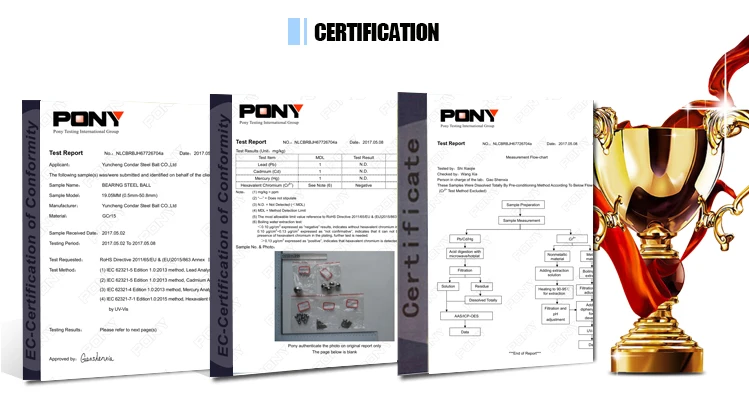
Our certification
Steel ball testing
The hardness of steel balls is generally tested using a Rockwell hardness tester, and is usually expressed as HRC+ value.
1. The hardness of bearing steel balls is generally HRC60-66;
2. The hardness of stainless steel balls is generally around HRC26;
3. The hardness of carbon steel balls is generally HRC55-65;
4. The hardness of the soft carbon steel ball is approximately HRC30;
G5 and G10 high-precision steel balls are mainly used to measure ellipticity, that is, the spherical error of the ball, which is mainly detected by a roundness meter. Through its measurement, a computer can draw a very precise trajectory, thereby determining whether the ellipticity is correct.
The most important thing for steel balls is to measure the tolerance using a micrometer or a spiral micrometer. Large steel balls are measured using vernier calipers.

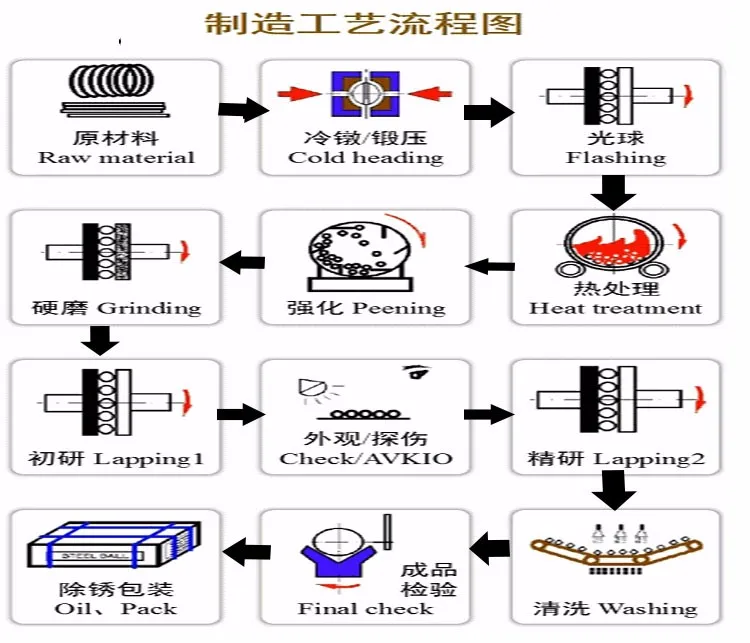
Because we are more than just a ball company, we can go beyond the technology to offer sub-components or complete solutions. We can combine ball technology with expertise in injection molding, segmented linear bearings, and motion control. We have extensive in-house tooling capabilities and offer rapid prototyping. With manufacturing facilities around the world, we can produce and deliver your solutions in minimal time and cost.
Q1. What material are these cleaning balls made from for bottle-cleaning use?
The product is specified as 3.0mm 304 stainless steel balls for use as a baby bottle cleaner. Our stated configuration focuses on corrosion-resistant stainless material and small-diameter format, which is practical where consistent contact media is required.
Q2. Can I use these small balls in narrow baby bottle openings?
The 3.0mm size indicates these are small steel balls intended for bottle-cleaning applications where access through restricted openings matters. We recommend buyers verify bottle neck dimensions and cleaning procedures against their own equipment and use standards.
Q3. Do you supply technical variants such as balls with holes or threaded options?
This listing covers solid 3.0mm 304 stainless steel cleaning balls only. If your application requires a steel ball with hole or a threaded steel ball, we advise confirming requirements separately, as those specifications are not included in the provided product description.
Q4. Are these the same as bearing-grade steel balls used in mechanical assemblies?
No, this product is described for cleaning use rather than for bearing assemblies. While buyers may also source bearing steel balls for industrial functions, our listed item is specifically a 304 stainless cleaning ball configuration for bottle-cleaning purposes.
Q5. Are you a suitable source for procurement teams comparing steel ball suppliers?
For this product page, we present a defined specification: red wine cleaning balls, 3.0mm, 304 stainless steel, for baby bottle cleaner use. As buyers often evaluate steel ball manufacturers by material and size consistency, we recommend matching this specification to your internal use case before ordering.


